I’ll admit - teaching my daughter early communication skills, including sign language and simple words/key phrases initially got my incredibly interested in the path of Speech Language Pathology (it’s still something I may consider as a ‘career add-on’ in the future).
But the more I thought about it, the more I realized that my skills as a movement observer and my deep awareness of expression, both subtle and overt, really supported me towards teaching my 15 month old to communicate essentially anything she needs from us.

At close to 15 months old, I can proudly say that my daughter can communicate basics like ‘food’, ‘milk’, ‘water’, ‘help’, ‘more’, ‘park/swing’ - but she can also communicate (and I believe deeply understands) concepts and words like ‘wait’, ‘short/long drive’, ‘hot’, ‘cold’, ‘friends’, ‘sharing’, ‘work’ (ie - “Dada’s at work”), ‘relax’ (this one she will lay her head back on the pillow and go “Neeaaaa” - it’s ridiculous), and a few others I’m probably forgetting in this post-bedtime writing moment.
I know that many children can sign/communicate early and well, but I have been reflecting on some of the pieces that I believe to have contributed to her skills, particularly as they relate to my professional background.
So how did we support this early communication?
It started with simple repetition. This is what any ‘expert’ will tell you about teaching a baby to sign. Do the sign, alongside the represented action or item, repetitively, early on. This simple piece reminds me of working with kiddos on the Autism Spectrum early in my work, particularly those who were non-verbal (non-speaking) - repetition of the specific word, sign, or phrase was really the key to success in our communications with each other. Consistently doing the action for a dance move we’ll call “scoop” while using a repetitive prosody (this means vocal tone, melody and rhythm) for the word as I invited the movement, had the kids successfully following the movement I was inviting them to do. This consistency and repetition was key in helping their brains decode what was being asked of them through both movement and verbalization. I see this in how my baby has learned many of the expressions she uses.
Another major piece that reminds me of my work as a Dance/Movement Therapist is understanding the value of mirroring and attunement. What I mean, is by consistently matching my daughters facial expressions, body language, and muscle tone whenever she would successfully communicate something to us, she learned something. The value of her knowing, in her body, that she has been seen and understood, gave her a major leap in confidence towards using any bits of signing she could.
When she knows, through her body and my movement, that Mama understands and is paying attention to her, she knows she can keep going and keep trying on all kinds of communication, even if it’s messy.
This reminds me again of a child I worked with with ASD who would communicate very minimally with many/any of his supports at school. He would spend our dance class running laps, up and down the room, rarely making eye contact or connection with anyone in the space. One day, I began paying particular attention to him - and began galloping alongside him up and down the room. I smiled and giggled when he did, and matched his energy as best I could. After a few laps of him looking up at the ceiling, he noticed me beside him, and gave me direct eye contact and a huge smile. My intuition in that moment said that he felt seen by me. And, as time went on, this boy would connect more and more with me each dance class. He would come to me and non-verbally request to hold props, or be a part of the exercise we were doing. He would make more direct contact with me whenever I would mirror and follow his movements, and near the end of my time working at that school, he even gave me a hug at the end of class.
This is the power of feeling seen - it enables communication and connection even when words aren’t available.
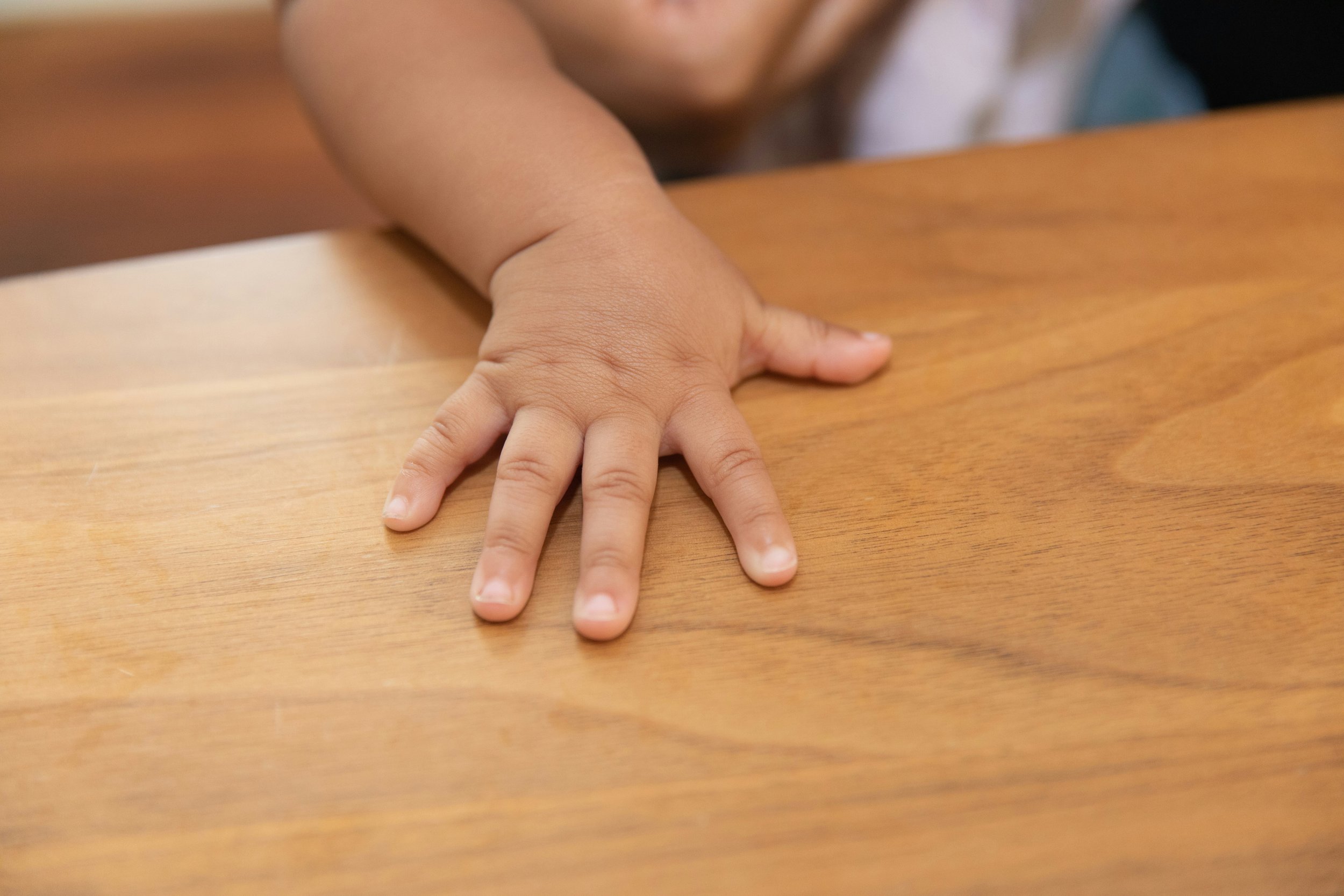
One last piece I’ll name is that since offering my daughter some signs, she has began making up signs of her own. In knowing that her expression extends beyond her capacity for verbal language, she has taken steps towards finding ways to use her body and her hands to tell us what’s on her mind. This points to the value of expression through the body - in a subtle yet obvious way. When I work with my clients and support them to understand that their body speaks even when there are no words, this increases their capacity to discover outlets for feelings, for experiences that are beyond words, and for knowing that just because we can’t ‘explain’ or ‘find the words’ for something deep within, that it isn’t valuable and worth paying attention to.
If you‘ve made it this far, thanks for reading along. Motherhood has taken up the majority of my time and energy lately, but I’ve also been feeling the call to create more expressively again when I have the time.
Do you have questions or curiosities about Dance/Movement Therapy, how it relates to motherhood, or about my work with individuals on the autism spectrum? If so, please leave a comment or send me a message - giving me further writing inspiration fo future posts!
With love,
Marie-Claire